
For teachers · Teaching
Using picture books in an Islamic studies class or madrasah
The short answer
Picture books work in an Islamic studies class when one book carries one lesson. Show it on a projector or whiteboard, read it aloud or let narration read it, pause two or three times to ask questions, then use review questions and a short activity. A 20-page book fits a 30-minute lesson with time to discuss.
Picture books are among the most useful tools an Islamic studies teacher has, and among the most underused beyond the youngest classes. A good one gives the whole class the same story, the same pictures and the same question to think about, in a few minutes. This guide covers why they work, a 30-minute lesson plan you can reuse every week, how to question well, and the practical side of using a projector or whiteboard.
Why use picture books in Islamic studies?
Because children learn through stories, and so much of the deen comes to us as stories: the Prophets, the Companions, the people in the Prophet's ﷺ hadith. A picture book written for children puts one idea on each page, in words a child can follow, with a picture that carries the meaning. It also slows a lesson down to a pace where children can think.
The Prophet ﷺ himself taught with questions and images. He once asked his Companions to name a tree whose leaves do not fall, that is like the believer. They thought of the trees of the desert, until he told them it was the date palm (Sahih al-Bukhari and Sahih Muslim). A question, a picture, a moment of thinking, then the answer: that is a lesson structure you can use with any good story. Allah tells us to invite to His way "with wisdom and good teaching" (Qur'an 16:125).
A 30-minute lesson plan with one picture book
Open with a hook (3 minutes)
Start with a question or an object linked to the story: a date, a bowl, a picture of a ship. "Has anyone ever been really thirsty?" gets every hand up before a story about water.
Read it once, for the story (6 minutes)
Show the book on the projector or whiteboard so every child can see the pictures. Read it yourself, or let the narration read it while the words light up. No stopping this time: let them enjoy it.
Read it again, with pauses (8 minutes)
Go back to two or three key pages and ask: What is happening? Why did he do that? What would you have done? Give thinking time, then take answers from different children.
Show the source (3 minutes)
Put up the ayah or hadith the story is built on, with its meaning. Read it together. This is the moment children learn that the story is true, and where it comes from.
Review together (5 minutes)
Use the book's review questions, in pairs or as a whole class. Notice which answers come easily and which need another look next lesson.
Finish with an activity and a link home (5 minutes)
A drawing, a short role-play, three written sentences or a dua learned together. Send one question home for families to ask at dinner.
Repeat the same structure every lesson. When children know the shape of the lesson, they spend their attention on the content.
How do I ask good questions about a story?
Mix four kinds of question, and ask more of the later ones as children get older:
- What happened? "What did the man find for the thirsty dog?" Checks that everyone followed.
- Why? "Why do you think he went back down the well?" Gets children thinking about intentions.
- What would you do? "Have you ever helped someone who could not ask for help?" Brings the lesson into their own lives.
- What does the source teach? "What does this hadith tell us about kindness?" Connects the story to the deen.
Give thinking time before taking answers, use talk partners so every child says something, and praise good reasoning, not only right answers. Above all, keep it warm. The Prophet ﷺ said, "Make things easy and do not make them difficult; give good news and do not drive people away" (Sahih al-Bukhari and Sahih Muslim).
How do I use a projector or whiteboard?
- Open it in a browser, full screen. ilmbee books run in any browser, including on school Chromebooks, with no app to install.
- Use narration for early readers. Read to me reads each page aloud and lights up every word as it is said, so young children follow the words while they listen. You stay free to watch the class.
- Use Watch for a calm start or end. The book reads itself and turns its own pages, like a short film.
- Open the book before the lesson. Once a book has opened, it keeps working if the classroom Wi-Fi drops.
- Check the sound and the size from the back of the room before the children arrive.
How do I adapt it for different ages?
- Ages 4 to 6: shorter steps, more movement. Act out the story, point to things in the pictures, and keep to one question per pause.
- Ages 7 to 9: the full lesson. Add a written retelling, and let children ask questions of their own.
- Ages 10 and 11: spend longer on the source. Let them find the ayah or hadith, explain it, and connect it to other stories they know.
How do I plan a term with picture books?
Sequence matters as much as the books. A class that has learned who Allah is understands the prayer; a class that has learned the prayer understands the stories of the people who prayed. Series 01 is built in that order: who Allah is from Allah is the Creator (Book 01), creation, the Prophet ﷺ, salah from Let Us Perform Salah (Book 13), worship and the holy places, then manners and the stories. One book a lesson, taken in order, gives you a term's plan with no extra work. Each book ends with a "Review your reading" page of questions for the review step.
Some books work especially well as whole-class discussion starters: Abu Huraira and the Bowl of Milk (Book 23) for sharing, The Man and the Thirsty Dog (Book 51) for kindness to animals, Knock Before You Enter (Book 70) for asking permission and Six Beautiful Rights Between Muslims (Book 76) for the rights Muslims have over each other.
Can I use ilmbee in my school or madrasah?
Yes, and we would be glad to help. The family purchase covers one family at home. For a class, a madrasah or a homeschool co-op, we agree terms directly with each school, so please talk to us first. The first three books are free for anyone to read, so you can try them on your classroom screen before you write. See Series 01 for schools and madrasahs.
The books in this guide
From ilmbee Series 01, 100 illustrated books read in order. The first 3 are free to read.
 Book 01Free to readAllah is the CreatorAqeedah
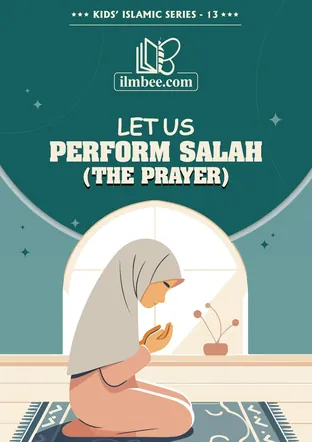 Book 13Let Us Perform SalahQuran & Salah
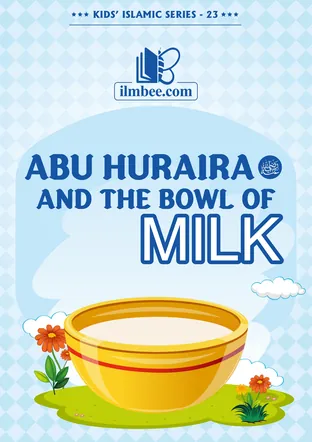 Book 23Abu Huraira and the Bowl of MilkSeerah & Companions
 Book 51The Man and the Thirsty DogAkhlaq & Good Deeds
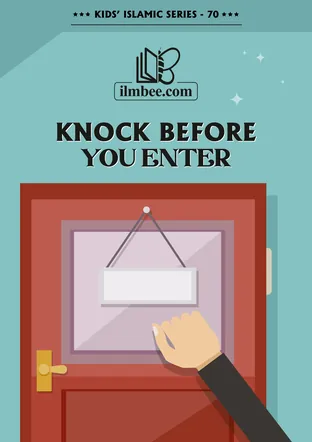 Book 70Knock Before You EnterAkhlaq & Good Deeds
 Book 76Six Beautiful Rights Between MuslimsAkhlaq & Good Deeds
Frequently asked questions
How do you teach Islamic studies to young children in a classroom?
Use short, sourced stories with one idea each, shown so every child can see the pictures. Read, pause to ask questions, show the ayah or hadith behind the story, review it together, and finish with a small activity. Repeat the pattern every lesson so children know what to expect.
How long should a story-based Islamic studies lesson be?
About 30 minutes suits most primary classes: a few minutes to open, two readings of a short picture book, the source, review questions and an activity. With ages four to six, shorten each part and add movement.
What questions should I ask after reading an Islamic story?
Mix four kinds: what happened, why someone acted as they did, what the children would have done, and what the ayah or hadith teaches us. Ask "why" more than "what", and give thinking time before taking answers.
Can I show ilmbee books to my class on a projector?
Please talk to us first. The family purchase is for a family at home; for a class, a madrasah or a homeschool co-op we agree terms directly with you. The first three books are free for anyone to read, so you can see today how a book works on a classroom screen.
How do I keep a madrasah class engaged during story time?
Give the children a job: spotting something in the pictures, predicting what happens next, acting out a scene, or answering a question in pairs. Keep the reading short and lively, and come back to the same story more than once.
Sources
Qur'an references are given as surah:ayah, with the meaning in plain English. Hadith are from the collections named.
- Qur'an 16:125 (An-Nahl): invite to the way of your Lord with wisdom and good teaching.
- Sahih al-Bukhari 69; Sahih Muslim 1734: "Make things easy and do not make them difficult; give good news and do not drive people away."
- Sahih al-Bukhari 61; Sahih Muslim 2811: the Prophet ﷺ asked his Companions to name a tree that is like the believer (the date palm), teaching through a question.