
For parents · Seasons
Ramadan with young children: a simple plan for ages 4 to 11
The short answer
Make Ramadan with young children about small, daily habits rather than big events: a short story each evening, a practice fast sized to their age, a little Qur'an and dua, and something given to others. Plan it week by week, explain why Muslims fast, and let them feel part of the family's worship.
Children remember Ramadan by how it felt: the iftar table, staying up a little later, the smell of the masjid, the first time they fasted until lunch. You do not need a packed activity calendar to give them that. A few small habits, repeated every day for thirty days, will teach more than any single event. Here is a simple plan.
How do I explain why Muslims fast?
Use a few true sentences, and come back to them often. Allah tells us that fasting was prescribed for us, as it was for people before us, "so that you may become mindful of Allah" (Qur'an 2:183). Ramadan is also the month in which the Qur'an was revealed (Qur'an 2:185). For a young child:
- "Ramadan is the month the Qur'an came down."
- "Allah asked grown-ups to fast in it, from dawn until sunset."
- "Fasting helps us remember Allah more, and be thankful and kind."
Older children can hear the promise too: whoever fasts Ramadan with faith, hoping for its reward, has their past sins forgiven (Sahih al-Bukhari and Sahih Muslim). Let Us Fast in Ramadan (Book 14) explains fasting in pictures for young children, and there is more on the words to use in Explaining fasting to a child.
Should young children fast?
Fasting becomes an obligation at maturity, so a young child is not required to fast. Many families still let children practise, gently and as they grow, and the Sunnah shows this was done with care. The Companion ar-Rubayyi' bint Mu'awwidh, radiyallahu anha, described how they had their young children fast on the day of 'Ashura, and made them toys of wool to keep them busy until it was time to eat (Sahih al-Bukhari and Sahih Muslim).
Practice fasts that families often use:
- Ages 4 to 6: no fasting needed. Let them join suhoor or iftar, and "fast" from one treat for the day.
- Ages 7 to 9: a morning fast, until lunch, on a weekend or a quiet day.
- Ages 10 and up: longer fasts as they are able, building towards whole days.
Watch for real tiredness, make sure they drink well at suhoor and iftar, and never shame a child who breaks a practice fast. If your child has a health condition, ask your doctor, and for questions of practice, ask a scholar you trust.
A week-by-week Ramadan plan for families
| Week | Theme | Do together | Read |
|---|---|---|---|
| 1 | Why we fast | Set up a Ramadan corner with a prayer mat and books. Talk about suhoor and iftar. | Let Us Fast in Ramadan (Book 14), Angels Listen to the Qur'an (Book 93) |
| 2 | Giving | Start a sadaqah jar. Let your child choose where it goes at the end of the month. | Let Us Give Charity (Book 15), The Greatest Charity (Book 84), A Secret Act of Kindness (Book 83) |
| 3 | The Qur'an and dua | Learn Surah al-Qadr together. Make a short dua as a family before iftar. | The Dua That Brought Rain (Book 77), The Blessed Food (Book 87) |
| 4 | The last ten nights and Eid | Stay up a little on an odd night for a short prayer or dua. Give the sadaqah jar. Prepare Eid gifts. | The Caravan of Generosity (Book 86), The Night of the Hungry Children (Book 85) |
What does a Ramadan evening look like with small children?
Keep it simple and predictable. Before iftar, a short family dua: it is a natural moment to ask Allah for something together. After iftar and Maghrib, a story of about five minutes, ideally one a night all month. Then whatever your family's evening usually holds, with bedtime as close to normal as you can manage. One story a night for thirty nights is thirty conversations about faith, and that adds up.
How do I teach giving in Ramadan?
The Prophet ﷺ was the most generous of people, and he was at his most generous in Ramadan (Sahih al-Bukhari and Sahih Muslim). Tell your child that, then give them a way to be generous too: coins in a jar, a toy they choose to give away, a plate of food carried to a neighbour, or helping set the table for iftar guests. Let them decide something about where their jar goes, so the giving is truly theirs.
How do I teach Laylat al-Qadr to a child?
Surah al-Qadr is only five ayat, short enough to learn during the month. It tells us that one night in Ramadan is "better than a thousand months" (Qur'an 97:3). Ask your child how long a thousand months would be (more than eighty years) and watch their face. The Prophet ﷺ told us to look for this night in the odd nights of the last ten (Sahih al-Bukhari). Older children love being allowed to stay up a little on one of those nights for a short prayer and a dua with you. There is more in Laylatul Qadr for kids.
How do I avoid Ramadan overload?
- Choose two or three habits, not ten. A story, a jar and a dua are enough. If you want more ideas, pick one or two from Ramadan activities for kids.
- Protect sleep. Late iftars are tiring for children. Keep the bedtime routine, even if it starts later.
- Make it theirs. Small jobs, like laying out dates or calling everyone to iftar, make children feel part of the month.
- Talk about Eid early, so the end of the month is something to look forward to, not just the end of the fun.
The books in this guide
From ilmbee Series 01, 100 illustrated books read in order. The first 3 are free to read.
 Book 14Let Us Fast in RamadanWorship & Holy Places
 Book 15Let Us Give CharityWorship & Holy Places
 Book 77The Dua That Brought RainDuas & Dhikr
 Book 83A Secret Act of KindnessAkhlaq & Good Deeds
 Book 84The Greatest CharityAkhlaq & Good Deeds
 Book 85The Night of the Hungry ChildrenSeerah & Companions
 Book 86The Caravan of GenerositySeerah & Companions
 Book 87The Blessed FoodSeerah & Companions
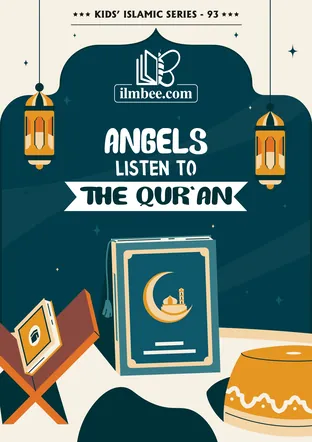 Book 93Angels Listen to the Qur'anQuran & Salah
Frequently asked questions
At what age should a child start fasting in Ramadan?
Fasting becomes an obligation at maturity. Before that, many families let children practise with part-day fasts as they grow, as the Companions did with their children (Sahih al-Bukhari and Sahih Muslim). For a particular child, especially one with a health condition, ask a scholar you trust and your doctor.
How do I explain Ramadan to a 5-year-old?
Keep it to a few true sentences: Ramadan is the month the Qur'an came down. Allah asked grown-ups to fast in it, from dawn until sunset, so they remember Him more and become better people. Children can join in by being extra kind, praying, giving and reading.
What are good Ramadan activities for young children?
A short story every evening, a sadaqah jar they fill and give from, helping prepare iftar, learning Surah al-Qadr, making dua together before iftar, and a practice fast sized to their age.
How do I teach my child about Laylat al-Qadr?
Read Surah al-Qadr together and explain that one night in the last ten nights of Ramadan is better than a thousand months (Qur'an 97:3). The Prophet ﷺ told us to look for it in the odd nights of the last ten (Sahih al-Bukhari). Let older children stay up a little on those nights for a short prayer or dua with you.
What should children read during Ramadan?
One short book a night works well. Start with books about fasting and giving, such as Let Us Fast in Ramadan (Book 14) and Let Us Give Charity (Book 15), then stories about generosity and the Qur'an.
Sources
Qur'an references are given as surah:ayah, with the meaning in plain English. Hadith are from the collections named.
- Qur'an 2:183 (Al-Baqarah): fasting is prescribed for you, as it was for those before you, so that you may become mindful of Allah (taqwa).
- Qur'an 2:185 (Al-Baqarah): the month of Ramadan, in which the Qur'an was revealed.
- Qur'an 97:1-5 (Al-Qadr): the Night of Decree, better than a thousand months.
- Sahih al-Bukhari 38; Sahih Muslim 760: whoever fasts Ramadan with faith, hoping for its reward, has his past sins forgiven.
- Sahih al-Bukhari 1960; Sahih Muslim 1136: ar-Rubayyi' bint Mu'awwidh (radiyallahu anha) on the Companions having their young children fast on 'Ashura, with toys of wool to occupy them until it was time to eat.
- Sahih al-Bukhari 6; Sahih Muslim 2308: the Prophet ﷺ was the most generous of people, and most generous of all in Ramadan.
- Sahih al-Bukhari 2017: seek Laylat al-Qadr in the odd nights of the last ten nights of Ramadan.