
For parents · Seasons
How to explain Eid al-Adha and Qurbani to children
The short answer
Tell it as a story of love and trust. Allah tested Prophet Ibrahim, and he and his son Ismail were both ready to obey; Allah then sent a ram in Ismail’s place. On Eid al-Adha, Muslims who can afford it sacrifice an animal to remember this, and share the meat with family, neighbours and people in need.

Eid al-Adha raises questions that Eid al-Fitr does not. Why would Allah ask a father to sacrifice his son? What happens to the sheep? Children deserve true answers, and the Qur’an gives you a story that, told well, is about love, trust and mercy. This guide gives you the story as the Qur’an tells it, Qurbani in simple words, and calm answers to the questions children actually ask.
Eid al-Adha 2027 is expected around 16 or 17 May, depending on the moon sighting where you live. Tell the story in the days before, not on the morning itself.
How do you explain Eid al-Adha to a child?
Start with the story, and let the meaning come out of it. What you say depends on age:
- Ages 3 to 5: “Eid al-Adha is the big Eid when people go to Makkah for Hajj. We remember Prophet Ibrahim, who loved Allah so much that he was ready to do anything Allah asked. And we share meat with people who need it, so everyone has a feast.”
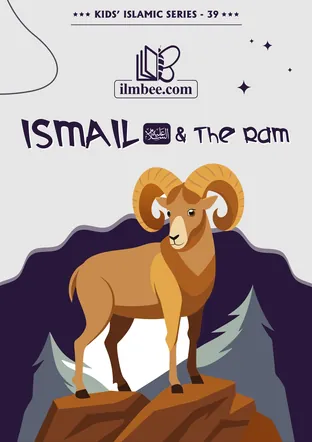
- Ages 6 to 8: the full story below, told over two evenings, with Ismail and the Ram (Book 39) as the picture book version. For the whole life of Prophet Ibrahim, see Ibrahim and Ismail story for kids.
- Ages 9 to 11: the story, plus the deeper idea: what reaches Allah is not the meat or the blood but our taqwa, our awareness of Him (Qur’an 22:37). Ask them what they would find hard to give up for Allah.
The story of Ibrahim and Ismail, for children
Allah tells this story in Surah as-Saffat (Qur’an 37:99-111). Here it is in plain words:
- Prophet Ibrahim asked Allah for a righteous child, and Allah gave him a gentle, patient boy, Ismail.
- When Ismail was old enough to walk and work beside his father, Ibrahim saw in a dream that he was sacrificing his son. For a Prophet, a dream like this is a command from Allah.
- Ibrahim told Ismail and asked what he thought. Ismail answered, “O my father, do as you are commanded. You will find me, if Allah wills, among the patient” (Qur’an 37:102).
- They both gave themselves to Allah’s command. Then Allah called out to Ibrahim that he had fulfilled the dream. It was a clear test, and they had passed it.
- Allah ransomed Ismail with a great sacrifice, a ram (Qur’an 37:107). Ismail was safe.
Then say the most important sentence: “Allah never let Ismail be hurt. He was testing how much Ibrahim and Ismail loved and trusted Him, and they both showed that they loved Allah most of all.” Many children also need to hear that this was a test for a Prophet, once, and that Allah does not ask parents to harm their children.
What is Qurbani? A simple explanation
Qurbani (also called udhiyah) is the sacrifice of a sheep, goat, cow or camel after the Eid al-Adha prayer, done for Allah, in memory of Ibrahim’s sacrifice. For a child:
- It is for Allah. Allah says that neither the meat nor the blood reaches Him; what reaches Him is our taqwa (Qur’an 22:37).
- It is for sharing. Allah tells us to eat from it and to feed people in need (Qur’an 22:36). Many families share the meat between their own home, relatives and friends, and people who need it.
- It can happen far away. Many families arrange their Qurbani through a trusted charity, so the meat reaches families in another country.
Who must give Qurbani, which animals, how many shares and on which days are fiqh questions on which scholars differ in the details. Ask a scholar you trust.
How do I talk about the animal without upsetting my child?
Children who love animals often worry most. Be calm and honest, and tell them three things:
- Islam commands kindness to the animal. The Prophet ﷺ said that Allah has prescribed excellence in everything, and that when we slaughter we must do it well: sharpen the blade and spare the animal suffering (Sahih Muslim).
- It is food, shared. The animal becomes a meal for many families, some of whom rarely eat meat.
- Kindness to animals is a big deal in Islam. Stories like The Man and the Thirsty Dog (Book 51), about a man forgiven for giving water to a thirsty dog, show children how much Allah loves mercy to animals.
Whether a child should watch is a family decision, not a test of faith. Many families keep young children away and let older children help with sharing the meat instead.
What else can children do for Eid al-Adha?
- The first ten days of Dhul Hijjah. The Prophet ﷺ said no good deeds are better than those done in these days (Sahih al-Bukhari). A good deed a day is a perfect countdown for children.
- Follow the pilgrims. Show them the Kaaba, ‘Arafah and Mina on a simple map, and read Let Us Visit Makkah (Book 16). See Hajj for kids.
- Help deliver the meat. Packing portions and carrying them to neighbours is the part children remember.
- Plan the day. Ideas for the morning, the prayer and the days after are in Eid activities for kids.
The books in this guide
From ilmbee Series 01, 100 illustrated books read in order. The first 3 are free to read.

Frequently asked questions
Why do Muslims celebrate Eid al-Adha?
Muslims celebrate Eid al-Adha to remember how Prophet Ibrahim and his son Ismail were ready to obey Allah, and how Allah ransomed Ismail with a ram; it falls on the tenth of Dhul Hijjah, during Hajj.
What is Qurbani in simple words?
Qurbani is the sacrifice of a sheep, goat, cow or camel on Eid al-Adha, done for Allah, with the meat shared among family, friends and people in need.
How do I explain the sacrifice to a young child?
Focus on love and trust: Ibrahim loved Allah more than anything, Allah never let Ismail be harmed, and today we share meat so that everyone can eat well on Eid.
Should children watch the Qurbani?
There is no single answer for every child: many families keep young children away and explain it gently, while older children help share the meat, so decide by your child and ask a local scholar about the details.
Who has to give Qurbani?
Scholars differ on whether Qurbani is required or strongly recommended for a family that can afford it, so ask a scholar you trust about your own situation.
Sources
Qur'an references are given as surah:ayah, with the meaning in plain English. Hadith are from the collections named.
- Qur'an 37:99-111 (As-Saffat): Ibrahim prays for a righteous son; the dream; the son says, “O my father, do as you are commanded; you will find me, if Allah wills, among the patient” (37:102); “We ransomed him with a great sacrifice” (37:107).
- Sahih al-Bukhari 138 (end of the hadith): 'Ubayd ibn 'Umayr said the dreams of the Prophets are revelation, then recited Qur'an 37:102. For scholar review.
- Qur'an 17:31 (Al-Isra'): do not kill your children (basis for “Allah does not ask parents to harm their children”).
- Qur'an 22:37 (Al-Hajj): neither their meat nor their blood reaches Allah; what reaches Him is your taqwa.
- Qur'an 22:36 (Al-Hajj): eat from them, and feed the one who does not ask and the one who asks.
- Sahih Muslim 1955: Allah has prescribed excellence in everything; when you slaughter, slaughter well: sharpen the blade and spare the animal suffering.
- Sahih al-Bukhari 2363; Sahih Muslim 2244: a man gave water to a thirsty dog and Allah forgave him (via Book 51).
- Sahih al-Bukhari 969: no good deeds are better than those done in these days (the first ten days of Dhul Hijjah).