
For parents · The Prophets
The story of Prophet Yusuf for kids, from the well to the palace
The short answer
Prophet Yusuf, alayhis salaam, was a son of Prophet Yaqub. His jealous brothers threw him into a well, and he was sold in Egypt, wrongly blamed and put in prison. Allah raised him to care for Egypt’s food stores. When his brothers came for food, he forgave them, and his shirt brought back his father’s sight.
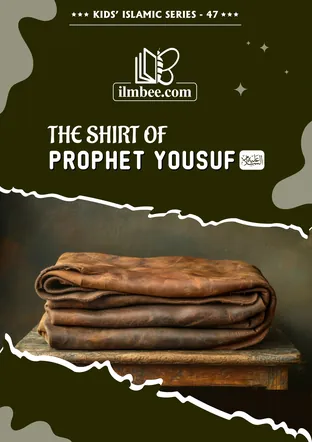
The story of Prophet Yusuf, alayhis salaam (also spelled Yousuf, and called Joseph in English), is the only Prophet’s story the Qur’an tells from beginning to end in a single surah. Allah opens it by calling it “the best of stories” (12:3). It has a dream, a well, a prison, a king and a family brought back together. Here is a version for children to read aloud, then the lessons, questions to ask and where each part is in Surah Yusuf.
Who was Prophet Yusuf?
Yusuf, alayhis salaam, was the son of Prophet Yaqub, the grandson of Prophet Ishaq and the great-grandson of Prophet Ibrahim (12:6; 12:38). His story is told in Surah 12 of the Qur’an, which carries his name.
The story of Prophet Yusuf, to read aloud
The numbers in brackets are the surah and ayah, for you rather than for reading aloud. When you say his name, add “alayhis salaam”: peace be upon him.
The dream
When Yusuf, alayhis salaam, was a boy, he had a dream. He told his father, Prophet Yaqub: “O my father, I saw eleven stars, and the sun and the moon. I saw them bowing down to me” (12:4).
His father understood that Allah had chosen Yusuf for something special. “My son,” he said, “do not tell your brothers about this dream” (12:5).
The well
Yusuf had eleven brothers. He and his younger brother, Binyamin, were very dear to their father, and the older brothers grew jealous (12:8). They made a plan. “Let us throw him into the bottom of a well,” one said. “Some travellers will pick him up” (12:10).
So they took Yusuf out with them, and threw him into a deep well. But Allah told Yusuf, even there, that one day he would remind his brothers of what they had done (12:15).
That night the brothers came home crying. They said a wolf had eaten Yusuf, and showed their father his shirt with false blood on it. Yaqub knew it was not true. “Patience is best,” he said, “and Allah is the One I ask for help” (12:16-18).
Egypt and the prison
A caravan of travellers stopped at the well. A man let down his bucket, and found Yusuf! (12:19) They took him to Egypt and sold him for a few coins. The man who bought him told his wife, “Look after him well” (12:20-21). Yusuf grew up in that house, and Allah gave him wisdom and knowledge (12:22).
Then Yusuf was blamed for something he had not done, and he was put in prison, even though he was innocent (12:25-35). In prison he stayed kind and patient. When two young men told him their dreams, Yusuf first told them about Allah, the One, and then explained what their dreams meant (12:36-41).
The king’s dream
One day the king of Egypt had a strange dream: seven fat cows were eaten by seven thin cows, and there were seven green ears of grain and seven dry ones (12:43). No one could explain it. Then a man who had been in prison with Yusuf remembered him (12:45).
Yusuf explained: “For seven years, grow your crops, and store the grain. Then seven hard years will come, and you will eat what you stored” (12:47-48).
The king sent for Yusuf. But first, Yusuf asked for the truth about him to be made clear, and it was: everyone said he had done nothing wrong (12:50-51). Then Yusuf said, “Put me in charge of the storehouses of the land. I will look after them well” (12:55). And so he did.
The brothers come to Egypt
The hard years came, and people everywhere were hungry. Yusuf’s brothers came to Egypt to buy food. Yusuf knew who they were, but they did not know him (12:58). “Next time,” he said, “bring your brother from your father” (12:59). When they came back with Binyamin, Yusuf took his brother aside and said, “I am your brother” (12:69).
At home, Yaqub was still waiting. He had cried for Yusuf for so long that his eyes had turned white, and he could no longer see (12:84). But he never lost hope. “I only tell my sadness to Allah,” he said. “Go and look for Yusuf and his brother, and never give up hope of Allah’s mercy” (12:86-87).
The shirt
The brothers came to Yusuf once more. “Do you know what you did to Yusuf?” he asked them. “Are you Yusuf?” they said. “I am Yusuf,” he said, “and this is my brother. Allah has been kind to us” (12:89-90).
The brothers were ashamed. But Yusuf said: “No blame on you today. May Allah forgive you. He is the Most Merciful of all” (12:92).
“Take this shirt of mine,” he said, “and lay it over my father’s face. He will see again” (12:93). As the caravan set out from Egypt, far away, Yaqub said, “I can smell Yusuf!” (12:94) And when the shirt was laid over his face, he could see again (12:96).
The whole family came to live in Egypt. Yusuf welcomed his parents, and the dream he had seen as a boy came true (12:99-100). “My Lord has been so kind to me,” Yusuf said (12:100).
In 12:100 his parents and brothers bow before Yusuf, as in his dream. Scholars explain that bowing as a greeting of respect was allowed in the time of earlier Prophets; in the religion the Prophet Muhammad ﷺ brought, sujood is for Allah alone. Older children may ask about this.
What does the story of Yusuf teach children?
- Patience. In the well, in a strange land and in prison, Yusuf stayed patient and kept trusting Allah.
- Never lose hope in Allah. Yaqub waited for years and still said, “Never give up hope of Allah’s mercy” (12:87).
- Forgive. Yusuf could have punished his brothers. Instead he said, “No blame on you today” (12:92).
- Jealousy leads to wrong. The brothers’ jealousy made them do something terrible. When we feel jealous, we tell Allah and ask Him to help us.
- Allah’s plan is best. The well led to Egypt, and prison led to the palace. Allah was looking after Yusuf all along.
What can I ask my child after the story?
- What did Yusuf see in his dream?
- Why were his brothers jealous? What can you do when you feel jealous?
- What did Yusuf do in prison?
- What did Yusuf say to his brothers at the end? Why is forgiving hard sometimes?
- How did Yusuf’s shirt help his father?
What age is the story of Yusuf for?
A short version like this one works from about five. Keep the hard parts simple: “he was blamed for something he did not do” is enough for young children. The full surah also includes the episode with the wife of the man who bought him, and the king’s cup hidden in Binyamin’s bag (12:70-79). These are best read together, in a translation you trust, with children of about nine or ten and older.
Where is the story of Yusuf in the Qur’an?
- Yusuf 12:4-6: The dream
- Yusuf 12:7-18: The brothers’ plan, the well, the shirt with false blood
- Yusuf 12:19-42: Sold in Egypt; wrongly blamed; prison
- Yusuf 12:43-57: The king’s dream; Yusuf over the storehouses
- Yusuf 12:58-87: The brothers come for food; Binyamin
- Yusuf 12:88-101: “I am Yusuf”; forgiveness; the shirt; the family in Egypt
Which ilmbee book tells the story of Yusuf?
The Shirt of Prophet Yousuf (Book 47) tells this story for children aged 4 to 11. It is narrated, like every book in Series 01: with Read to me, each word lights up as it is read; with Watch, the pages turn by themselves. The first three books of the series are free to read now. Yusuf’s great-grandfather was Ibrahim; see the story of Prophet Ibrahim.
The books in this guide
From ilmbee Series 01, 100 illustrated books read in order. The first 3 are free to read.
Frequently asked questions
What is the story of Prophet Yusuf’s shirt?
The Qur’an mentions Yusuf’s shirt three times: his brothers brought it home stained with false blood (12:18); it was torn from the back, which showed he was innocent (12:25-28); and he sent it to his father, whose sight came back when it was laid over his face (12:93-96).
How many brothers did Prophet Yusuf have?
Eleven. The eleven stars in his dream stood for his eleven brothers, and the sun and the moon for his parents (12:4; 12:100).
What does the story of Yusuf teach children?
Patience and forgiveness. Yusuf stayed patient in the well and in prison, and when he could have punished his brothers, he said, “No blame on you today” (12:92).
Why is Surah Yusuf called the best of stories?
Allah opens it with “We relate to you the best of stories” (12:3), and it is the one Prophet’s story told from beginning to end in a single surah.
Who was Prophet Yusuf’s father?
Prophet Yaqub, alayhis salaam, the son of Prophet Ishaq and grandson of Prophet Ibrahim (12:6; 12:38).
What age is the story of Yusuf for?
A short version, like the one here, works from about five. The whole surah, with its harder parts, suits children from about nine or ten.
Sources
Qur'an references are given as surah:ayah, with the meaning in plain English. Hadith are from the collections named.
- Qur’an 12:1-111 (Yusuf): the whole surah; the table on this page maps its parts, including 12:70-79 (the king’s cup in Binyamin’s bag), mentioned for older children only.
- Qur’an 12:3 (Yusuf): We relate to you the best of stories.
- Qur’an 12:4-6 (Yusuf): the dream of eleven stars, the sun and the moon; do not tell your brothers; Allah will complete His favour on you as He did on your fathers Ibrahim and Ishaq.
- Qur’an 12:8-18 (Yusuf): the brothers’ jealousy; throw him into the well; Allah inspires Yusuf in the well; the false blood on the shirt; “patience is most fitting” (12:18).
- Qur’an 12:19-22 (Yusuf): the caravan finds him; sold for a few coins; the man in Egypt tells his wife to treat him well; wisdom and knowledge.
- Qur’an 12:25-35 (Yusuf): the shirt torn from the back; Yusuf imprisoned though innocent.
- Qur’an 12:36-42 (Yusuf): the two prisoners’ dreams; Yusuf calls them to worship Allah alone.
- Qur’an 12:43-49 (Yusuf): the king’s dream of seven fat cows and seven lean, seven green ears and others dry, and its meaning.
- Qur’an 12:50-56 (Yusuf): his innocence made clear; “put me over the storehouses of the land”.
- Qur’an 12:58-69 (Yusuf): the brothers come for food; bring your brother; “I am your brother”.
- Qur’an 12:84-87 (Yusuf): Yaqub’s eyes turn white from grief; “I complain of my grief only to Allah”; do not despair of Allah’s mercy.
- Qur’an 12:89-101 (Yusuf): “I am Yusuf”; “No blame on you today”; the shirt over his father’s face; the family comes to Egypt; the dream comes true; Allah was kind to me.
- Qur’an 12:38 (Yusuf): the way of my fathers, Ibrahim, Ishaq and Yaqub.