
For parents · The Prophets
The story of Prophet Yunus and the whale, for kids
The short answer
Prophet Yunus, alayhis salaam, was a messenger Allah sent to call his people to worship Him alone. When they would not listen, he left them and boarded a ship, and a great fish swallowed him. In the darkness he made dua to Allah, Allah saved him, and when he returned, his people believed.
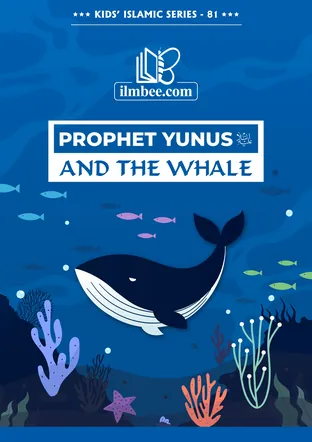
The story of Prophet Yunus, alayhis salaam, and the whale is one of the first Qur’an stories many children hear, and one they ask for again and again. (In English he is sometimes called Jonah.) Below is the story retold from the Qur’an in simple words you can read aloud, then the lessons, questions to ask your child afterwards, and where each part is in the Qur’an.
Who was Prophet Yunus?
Yunus, alayhis salaam, was one of the Prophets Allah sent with revelation (Qur’an 4:163). Allah sent him to a city of “a hundred thousand or more” people (Qur’an 37:147). The Qur’an does not name the city; scholars of tafsir identify it as Nineveh, in today’s Iraq, which is the name the ilmbee book uses. The Qur’an also calls him Dhun-Nun, “the one of the fish” (21:87), and a whole surah, Surah 10, carries his name.
The story of Prophet Yunus and the whale, to read aloud
The numbers in brackets are the surah and ayah, for you rather than for reading aloud. When you say his name, add “alayhis salaam”: peace be upon him.
Long ago, Allah sent Prophet Yunus, alayhis salaam, to a big city full of people. He told them: “Worship Allah alone, and leave your wrong ways.”
But the people would not listen. They kept on doing wrong.
Prophet Yunus became upset with them, and he left the city. He did not wait for Allah to tell him to go (21:87).
He went down to the sea and climbed onto a ship. The ship was full, very full, of people and their things (37:140).
Out at sea, the people on the ship drew lots to choose who would have to leave it. Drawing lots is like picking a name without looking. The lot fell on Yunus (37:141), and into the sea he went.
Then Allah sent a huge fish, and it swallowed Prophet Yunus (37:142).
Inside the fish, it was dark. The Qur’an calls it “the darknesses”: dark inside the fish, and dark under the deep sea. But Yunus knew that Allah could hear him, even there.
So he called out to Allah: “La ilaha illa anta, subhanaka, inni kuntu minaz-zalimin.” There is no god but You. Glory be to You. Truly, I have been among the wrongdoers (21:87).
Allah heard him. Allah answered his dua and saved him from his sadness (21:88). If Yunus had not remembered Allah, he would have stayed inside the fish until the Day of Judgement (37:143-144).
The fish came to the shore and let him out onto the open beach. Yunus was weak and tired. So Allah made a plant grow over him, a gourd plant with wide leaves, to shade him while he got better (37:145-146).
Prophet Yunus was so thankful to Allah for saving him. Then he went back to his people. And this time, they listened. They all believed in Allah, and Allah let them enjoy their lives for a long while (37:147-148).
The dua of Prophet Yunus
لَا إِلَٰهَ إِلَّا أَنتَ سُبْحَانَكَ إِنِّي كُنتُ مِنَ الظَّالِمِينَ
La ilaha illa anta, subhanaka, inni kuntu minaz-zalimin
“There is no god but You. Glory be to You. Truly, I have been among the wrongdoers.”
Qur’an 21:87
What does the story of Yunus teach children?
- Allah hears us everywhere. Even in the darkest place, inside a fish under the sea, Allah heard Yunus. Your child can talk to Allah in the dark, at bedtime, anywhere.
- Saying sorry to Allah is brave. Yunus did not make excuses. He said, “I have been among the wrongdoers,” and Allah forgave him and chose him (68:50).
- Never give up hope. Allah says that just as He saved Yunus, He saves the believers (21:88). Whatever goes wrong, we turn to Allah.
- Be patient with people. Yunus left his people too soon. When he went back, every one of them believed. People can change, so keep calling them to good, kindly.
- Thank Allah when He helps you. Yunus came out of the fish thankful, and went straight back to his work for Allah.
What can I ask my child after the story?
- Where was Prophet Yunus when he made his dua?
- What did he say to Allah? Can you say it with me?
- Who heard Yunus, even in the dark?
- Why do you think his people listened the second time?
- When could you say the dua of Yunus? (When you are scared, or when you have done something wrong and feel sorry.)
What age is the story of Yunus for?
From about three or four, tell the short version: a Prophet, a ship, a big fish, a dua in the dark, and Allah who saved him. Keep the tone safe and calm: Allah sent the fish, and Allah kept Yunus alive inside it. From five or six, teach the dua itself, a few words at a time. From about eight, read the verses of Surah As-Saffat together in a translation you trust, and talk about why Yunus was sorry and why his people were saved (10:98).
Where is the story of Yunus in the Qur’an?
- As-Saffat 37:139-148: The ship, the lots, the fish, the shore and the gourd plant; his people believe
- Al-Anbiya 21:87-88: His dua in the darknesses, and how Allah answered
- Al-Qalam 68:48-50: “The companion of the fish”, chosen by his Lord
- Yunus 10:98: The only town whose believing saved it
Which ilmbee book tells the story of Yunus?
Prophet Yunus and the Whale (Book 81) tells this story for children aged 4 to 11, and the retelling above follows it. Like every book in Series 01, it is narrated: with Read to me, each word lights up as it is read; with Watch, the pages turn by themselves. The first three books of the series are free to read now. For where Yunus fits among the other Prophets, see Stories of the Prophets for kids.
The books in this guide
From ilmbee Series 01, 100 illustrated books read in order. The first 3 are free to read.
Frequently asked questions
What dua did Prophet Yunus make inside the whale?
He said “La ilaha illa anta, subhanaka, inni kuntu minaz-zalimin”: there is no god but You, glory be to You, truly I have been among the wrongdoers (Qur’an 21:87). Allah answered it and saved him from his distress (Qur’an 21:88).
How long was Prophet Yunus inside the whale?
The Qur’an does not say how long. The ilmbee book simply says “some days”, and it is fine to tell a child that Allah knows exactly how long.
Was it a whale or a big fish?
The Qur’an calls it al-hut, a very large fish. In English it is usually called a whale, and Allah knows best what kind of creature it was.
Which surah tells the story of Prophet Yunus?
The fullest telling is in Surah As-Saffat (37:139-148). His dua is in Surah Al-Anbiya (21:87-88), and Surah 10 of the Qur’an is named Yunus, after him.
What is Prophet Yunus called in the Qur’an?
He is called Dhun-Nun, “the one of the fish” (21:87), and “the companion of the fish” (68:48), as well as by his name, Yunus.
Is the story of Yunus suitable for a four-year-old?
Yes, told simply: a Prophet inside a big fish, a dua in the dark, and Allah who heard him. Keep the focus on Allah’s care rather than on the sea.
Sources
Qur'an references are given as surah:ayah, with the meaning in plain English. Hadith are from the collections named.
- Qur’an 37:139-148 (As-Saffat): Yunus among the messengers; the laden ship, the drawing of lots, the fish, the shore, the gourd plant, and his people of a hundred thousand or more who believed.
- Qur’an 21:87-88 (Al-Anbiya): Dhun-Nun went off in anger; his call in the darknesses, “There is no god but You, glory be to You, I have been among the wrongdoers”; Allah answered him, and so He saves the believers.
- Qur’an 68:48-50 (Al-Qalam): the companion of the fish; his Lord chose him and made him one of the righteous.
- Qur’an 10:98 (Yunus): the people of Yunus believed and the punishment was lifted from them.
- Qur’an 4:163 (An-Nisa) and 6:86 (Al-An’am): Yunus named among the Prophets who received revelation.