
For parents · The Prophets
The story of Prophet Salih (Saleh) and the she-camel, for kids
The short answer
Prophet Salih, alayhis salaam, was sent to the people of Thamud, who carved homes into mountains. They asked for a sign, and Allah sent a she-camel, warning them not to harm her and to share the water with her. The worst of them killed her, and after three days a punishment came. Allah saved Salih and the believers.
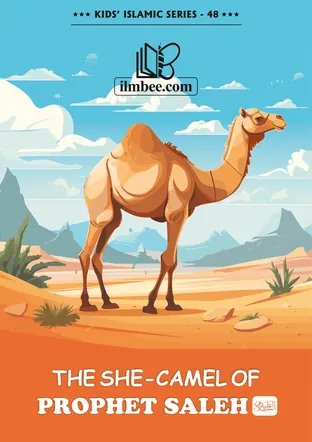
The story of Prophet Salih, alayhis salaam (also spelled Saleh), and the she-camel of Allah is told in several surahs of the Qur’an. It is a story about a sign from Allah, about sharing, and about what happens when people are too proud to listen. Here it is retold from the Qur’an for you to read aloud, then the lessons, questions to ask afterwards and where each part is in the Qur’an.
Who was Prophet Salih?
Salih, alayhis salaam, was a Prophet Allah sent to the people of Thamud, an Arab people who lived after the people of ’Ad (7:73-74). He was one of their own, and before he called them to Allah, they had had high hopes for him (11:62). His name means “righteous”.
The story of Prophet Salih and the she-camel, to read aloud
The numbers in brackets are the surah and ayah, for you rather than for reading aloud. When you say his name, add “alayhis salaam”: peace be upon him.
Long ago, in the land of Arabia, lived the people of Thamud. They were strong and clever. They built palaces on the plains, and carved houses out of the mountains (7:74). Allah had given them gardens and springs, crops and palm trees full of fruit (26:146-148).
But they did not thank Allah, and they worshipped other things besides Him.
So Allah sent them Prophet Salih, alayhis salaam. “O my people,” he said, “worship Allah. You have no god but Him. He made you from the earth and let you live in it. So ask Him to forgive you, and turn back to Him. My Lord is near, and He answers” (11:61).
A few people believed. But the proud ones said: “You are only a man like us. Bring us a sign, if you are telling the truth” (26:154).
So Allah sent them a sign: a she-camel. “This is the she-camel of Allah, a sign for you,” said Salih. “Let her eat on Allah’s earth, and do not harm her” (7:73).
The water would be shared. One day the she-camel would drink, and the next day the people would drink (26:155). That was fair, and it was a test for them (54:27-28).
For a while, the she-camel lived among them, eating and drinking. But the proud ones did not want to share. They called the worst of them (91:12), and he struck the she-camel down (54:29).
Then they laughed at Salih. “Bring us the punishment you warned us about!” they said (7:77).
Salih told them: “Enjoy yourselves in your homes for three days. This is a promise that will not be broken” (11:65).
After three days, a mighty blast came, and the earth shook, and the wrongdoers were destroyed (11:67; 7:78). But Allah, in His mercy, saved Salih and the believers who were with him (11:66).
Salih turned away, sad. “O my people,” he said, “I gave you the message of my Lord, and I gave you good advice. But you do not like those who give good advice” (7:79).
What does the story of Salih teach children?
- Respect Allah’s signs. The she-camel belonged to Allah. Hurting her was disobeying Allah.
- Share fairly. One day for the she-camel, one day for the people. Taking turns is part of being fair.
- Be thankful for what Allah gives. Thamud had homes, gardens and springs, and forgot who gave them.
- Listen to good advice. Salih only wanted good for his people. Those who listened were saved.
- Be kind to animals. Allah told the people not to touch the she-camel with harm (7:73).
What can I ask my child after the story?
- Where did the people of Thamud build their houses?
- What sign did Allah send them?
- How did the she-camel and the people share the water?
- What did Salih ask the people to do?
- Who did Allah save at the end?
What age is the story of Salih for?
From about four, tell it as the story of a special camel and a people who had to share, and keep the end to one gentle sentence: “Because they hurt Allah’s she-camel and would not listen, Allah’s punishment came, and Allah saved Salih and the believers.” From about seven, tell the whole story as above. From about nine, read the verses of Surah Hud (11:61-68) and Surah Ash-Shams (91:11-15) together in a translation you trust.
Where is the story of Salih in the Qur’an?
- Al-A’raf 7:73-79: The she-camel of Allah, the homes in the mountains, the earthquake
- Hud 11:61-68: Salih’s call, the three days, the believers saved
- Ash-Shu’ara 26:141-159: “Bring a sign”; the shared water
- Al-Qamar 54:23-31: The she-camel as a trial
- Ash-Shams 91:11-15: “The she-camel of Allah, and her drink”
- Al-Hijr 15:80-84: The people of al-Hijr
Which ilmbee book tells the story of Salih?
The She-Camel of Prophet Saleh (Book 48) tells this story for children aged 4 to 11. It is narrated, like every book in Series 01: with Read to me, each word lights up as it is read; with Watch, the pages turn by themselves. The first three books of the series are free to read now. For where Salih comes among the Prophets, see Stories of the Prophets for kids.
The books in this guide
From ilmbee Series 01, 100 illustrated books read in order. The first 3 are free to read.
Frequently asked questions
Who were the people of Thamud?
An Arab people who came after the people of ’Ad and carved homes out of the mountains (7:74). Allah sent them Prophet Salih, one of their own.
What was the sign of Prophet Salih?
A she-camel, which the Qur’an calls “the she-camel of Allah”, sent as a clear sign, with her own day to drink from the water (7:73; 17:59; 26:155).
What happened to the people of Thamud?
They killed the she-camel and mocked Salih, and after three days a mighty blast and an earthquake seized the wrongdoers, while Allah saved Salih and the believers (11:65-67; 7:78).
Where did the people of Thamud live?
In al-Hijr (15:80), a place in north-west Arabia, in what is today Saudi Arabia.
Is it Salih or Saleh?
Both are right. They are two English spellings of the same Arabic name, صالح, which means “righteous”.
Sources
Qur'an references are given as surah:ayah, with the meaning in plain English. Hadith are from the collections named.
- Qur’an 7:73-79 (Al-A’raf): Salih sent to Thamud; this is the she-camel of Allah, a sign; leave her to eat on Allah’s earth and do not touch her with harm; homes carved in the mountains (7:74); they hamstrung her and said “bring what you promise us” (7:77); the earthquake seized them (7:78); “I conveyed my Lord’s message and advised you, but you do not like advisers” (7:79).
- Qur’an 11:61-68 (Hud): “worship Allah, He made you from the earth and settled you in it, so ask His forgiveness and turn to Him; my Lord is near and answers” (11:61); they had had hopes for him before this (11:62); enjoy yourselves in your homes three days (11:65); Salih and the believers saved by Allah’s mercy (11:66); the blast seized the wrongdoers (11:67).
- Qur’an 26:141-159 (Ash-Shu’ara): gardens, springs, crops and palms (26:146-148); “you are only a man like us, bring a sign” (26:154); she has a drink and you have a drink, each on a known day (26:155); do not touch her with harm (26:156); they hamstrung her and became regretful (26:157).
- Qur’an 54:23-31 (Al-Qamar): the she-camel sent as a trial; the water shared between them (54:28); they called their companion and he struck (54:29).
- Qur’an 91:11-15 (Ash-Shams): the most wretched of them rose up; “the she-camel of Allah, and her drink”.
- Qur’an 17:59 (Al-Isra): We gave Thamud the she-camel as a clear sign, but they wronged her.
- Qur’an 15:80-84 (Al-Hijr): the people of al-Hijr denied the messengers; they carved homes out of the mountains.