
For parents · Aqeedah
How to teach your child about Allah, ages 4 to 7
The short answer
Start with what your child can see: Allah made the sky, the rain, the fruit on their plate, and them. Then teach three short truths: Allah is One, nothing is like Him, and He is the Most Merciful. Use Surah al-Ikhlas, everyday moments and short stories, and keep every answer brief and true.
Most children start asking about Allah somewhere between three and five, usually at bedtime and usually when you are tired. That is good news. A child who asks "Who made the moon?" is ready to learn, and the first answers they hear will stay with them for years. This guide gives you a simple order to teach in, words you can use tonight, and the Qur'an behind each idea so you can check it yourself.
When should I start teaching my child about Allah?
As soon as they can hear you. Long before a child can understand an explanation, they hear "Bismillah" before food and "Alhamdulillah" after it, and they learn that Allah is part of ordinary life. Planned teaching, with short stories and simple questions, usually works from around age three or four. Ages four to seven are the years to build the foundations, because children of this age think in concrete things: what they can see, touch and name.
What should I teach first?
Start with creation. Allah tells us in the Qur'an that He is the Creator of all things (Qur'an 39:62), and creation is something a four-year-old can point at. Every day gives you a lesson:
- At breakfast: "Who made the bananas grow?" Allah did, and He gave them to us.
- In the rain: "Where does rain come from?" Allah sends it down so the plants can drink.
- At bath time: "Who gave you two hands?" Allah made you, and made you well.
Keep the pattern the same each time: notice something, say that Allah made it, and say thank you to Him together. In time, your child starts doing it without you. This is the order ilmbee's Series 01 follows too: Allah is the Creator (Book 01) comes first, then books about the birds, the animals, fruit, vegetables and water, such as Allah Created the Birds (Book 07) and The World of Water (Book 11).
How do I explain that Allah is One?
Use Surah al-Ikhlas. It is four short ayat, a young child can learn it in a few weeks, and it says the most important thing about Allah. Its meaning, in plain words (Qur'an 112:1-4):
- Allah is One.
- Everyone and everything needs Allah, and Allah needs no one.
- He has no children and no parents.
- There is nothing like Him at all.
The Prophet ﷺ said this surah is equal to a third of the Qur'an (Sahih al-Bukhari), which is a lovely thing to tell a child who has just learned it. Another ayah gives you a sentence to come back to whenever your child imagines Allah as something they know: "There is nothing like Him, and He is the All-Hearing, the All-Seeing" (Qur'an 42:11). For a young child, "Allah is not like anything you have ever seen" is enough.
How do I teach that Allah loves us and is Most Merciful?
Lead with mercy. A child's first picture of Allah should be of the One who made them, feeds them, forgives them and loves to be thanked. Allah says, "My mercy encompasses all things" (Qur'an 7:156).
The Prophet ﷺ gave a picture children understand straight away. He said Allah made mercy in one hundred parts. He kept ninety-nine with Him, and sent down one part to the earth. From that one part, all of creation is kind to each other, so that a mother animal lifts her hoof away from her baby so she does not hurt it (Sahih al-Bukhari and Sahih Muslim). Then ask: if all the kindness in the world is one part, how merciful must Allah be? Allah's One Hundred Parts of Mercy (Book 57) tells this hadith as a picture book, and Allah is the Most Merciful (Book 03) and Allah is the Most Forgiving (Book 04) take the same idea further.
Accountability matters too, and children learn it in time. But a child who first knows Allah as loving and merciful will find it far easier to love obeying Him later.
How should I answer "Where is Allah?" and "Can I see Allah?"
Almost every child asks. It is not doubt; it is a small child putting something enormous into the only categories they have. Keep the answer short and true, and stop when you have said it.
"Where is Allah?" Allah is above the heavens, above His Throne, as He tells us in the Qur'an (20:5). He is not inside the things He made. And He sees and hears everything, so He always knows what you are doing and He hears every dua you make.
"Can I see Allah?" Not in this life. But Allah has promised the believers that in Jannah they will see Him (Qur'an 75:22-23). The Prophet ﷺ told his Companions, while they were looking at the full moon, that they would see their Lord as clearly as they saw that moon (Sahih al-Bukhari and Sahih Muslim).
If your child asks something you are not sure about, say so: "That's a good question. Let's ask someone who knows." Making up an answer to fill the silence creates something you will have to undo later.
What does a simple week look like?
Five minutes a day is plenty at this age. One way to fill them:
- Monday: a "Who made it?" walk. Name five things Allah made.
- Tuesday: read one short book together, such as Allah is the Sustainer (Book 02), about Allah providing for every creature.
- Wednesday: practise the first ayah of Surah al-Ikhlas.
- Thursday: a thank-you list at dinner. Everyone names one gift from Allah.
- Friday: a story of one of the Prophets, alayhimus salaam. See Stories of the Prophets for kids.
Repeat the same few ideas for weeks. Young children learn by hearing the same true thing many times, in many small moments.
What should I avoid?
- Teaching through fear first. Fear can come in later, in its right place. Love and gratitude should come first.
- Long lectures. Two sentences a child remembers beat ten minutes they forget.
- Unsourced stories. Many popular "Islamic" stories have no source. Use the Qur'an, authentic hadith and books that name their sources.
- Answering for the sake of it. If you do not know, say so, and find out together.
The books in this guide
From ilmbee Series 01, 100 illustrated books read in order. The first 3 are free to read.
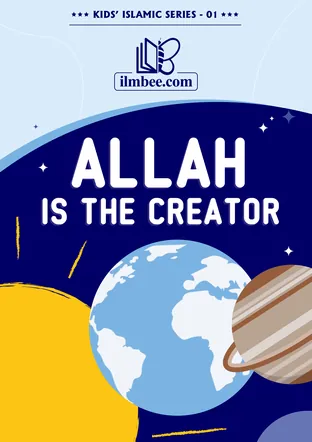 Book 01Free to readAllah is the CreatorAqeedah
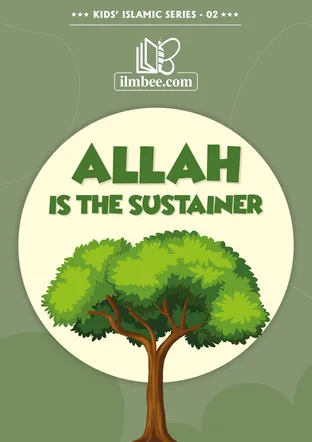 Book 02Free to readAllah is the SustainerAqeedah
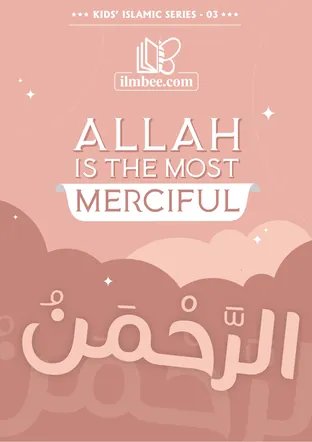 Book 03Free to readAllah is the Most MercifulAqeedah
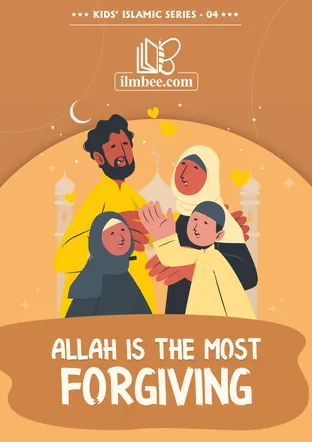 Book 04Allah is the Most ForgivingAqeedah
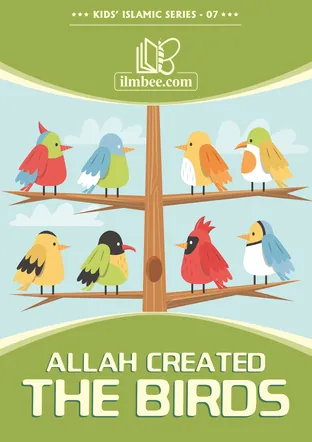 Book 07Allah Created the BirdsAllah's Creation
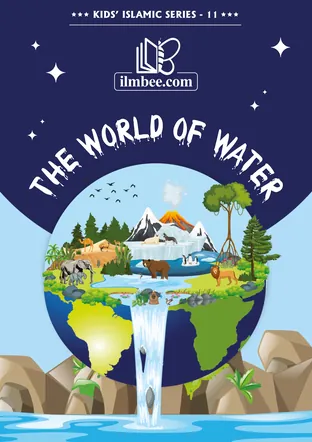 Book 11The World of WaterAllah's Creation
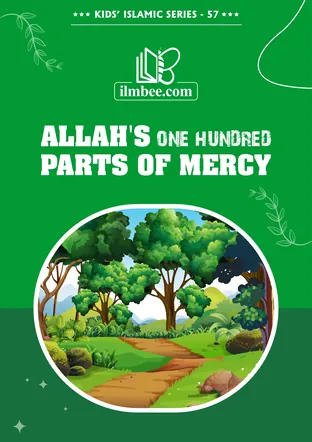 Book 57Allah's One Hundred Parts of MercyAqeedah
Frequently asked questions
At what age can a child understand who Allah is?
Children can learn simple, true sentences about Allah from around three or four: Allah made everything, Allah is One, Allah loves us and hears our duas. Between four and seven they can learn Surah al-Ikhlas and short stories. The deeper reasons come later, around eight to eleven, and build on these foundations.
How do I explain Allah to a 4-year-old?
Point to something they love and say Allah made it: the sun, their cat, their favourite fruit. Then add one truth at a time: Allah is One, nothing is like Him, and He is the Most Merciful. Keep it to a sentence or two, and repeat it often.
Which surah should I teach first to explain Allah?
Surah al-Ikhlas. It is four short ayat, easy for a young child to learn, and it explains who Allah is: One, needing no one, with no children or parents, and with nothing like Him (Qur'an 112:1-4).
What do I say when my child asks "Where is Allah?"
Keep it short and true: Allah is above the heavens, above His Throne (Qur'an 20:5), He is not inside the things He made, and He sees and hears everything, so He always hears your dua. Then stop, and let your child ask the next question if they have one.
Is there a book that explains Allah to young children?
ilmbee's Series 01 begins with six books about who Allah is, starting with Allah is the Creator (Book 01), which you can read free. Every line is sourced to the Qur'an or authentic hadith and named in the book.
Sources
Qur'an references are given as surah:ayah, with the meaning in plain English. Hadith are from the collections named.
- Qur'an 39:62 (Az-Zumar): Allah is the Creator of all things.
- Qur'an 112:1-4 (Al-Ikhlas): Allah is One, the Eternal Refuge; He neither begets nor is born; nothing is equal to Him.
- Qur'an 42:11 (Ash-Shura): There is nothing like Him, and He is the All-Hearing, the All-Seeing.
- Qur'an 7:156 (Al-A'raf): My mercy encompasses all things.
- Qur'an 20:5 (Ta-Ha): The Most Merciful, above the Throne, established (istawa).
- Qur'an 75:22-23 (Al-Qiyamah): faces that Day will be radiant, looking at their Lord.
- Sahih al-Bukhari 554; Sahih Muslim 633: "You will see your Lord as you see this moon."
- Sahih al-Bukhari 6000; Sahih Muslim 2752: Allah made mercy in one hundred parts and sent one part down to the earth.
- Sahih al-Bukhari 5013: Surah al-Ikhlas is equal to a third of the Qur'an.